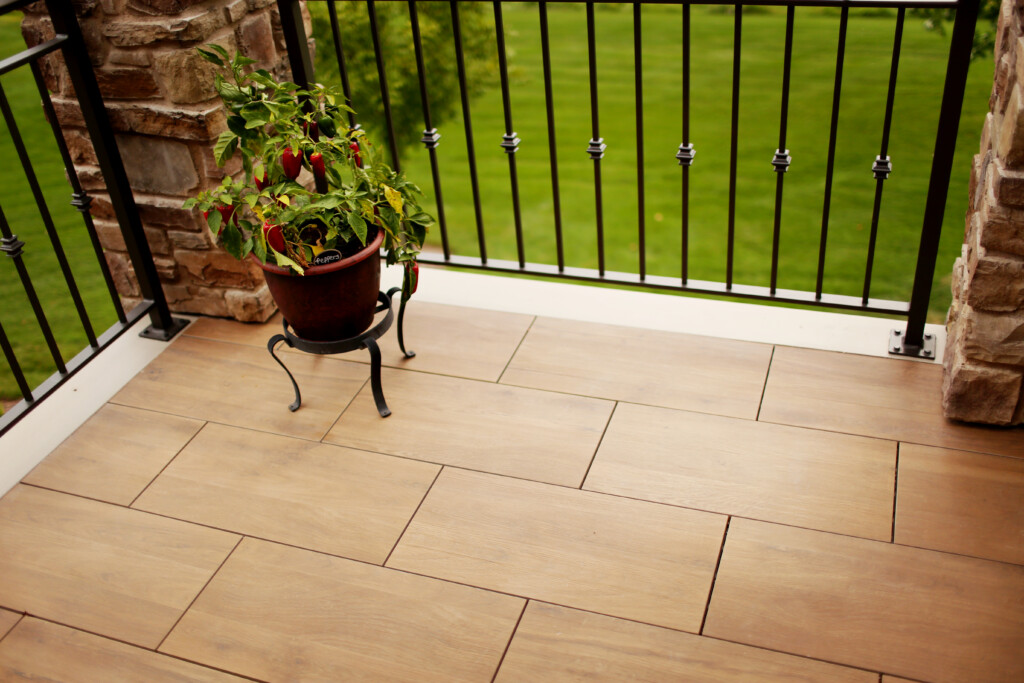
Mbrico Tile Decks vs Composite Decking
Mbrico Tile Decks vs Composite Decking
February 9, 2026
Composite decking has become one of the most common alternatives to wood. It promises lower maintenance, consistent appearance, and longer life compared to traditional lumber. At the same time, more architects, builders, and property owners are beginning to evaluate porcelain tile systems like Mbrico as a fundamentally different option.
While both are marketed as modern solutions, they solve very different problems. This article breaks down how Mbrico Tile Decks compare to composite decking in real world use.
What Composite Decking Is Designed to Do
Composite decking is typically made from a blend of wood fibers and plastic. It was developed to reduce some of the maintenance demands of wood while keeping a familiar deck board format.
Common advantages of composite decking include:
- No staining or sealing required
- Uniform board appearance
- Improved resistance to rot and insects
These benefits make composite a practical upgrade from traditional wood in many residential settings.
Where Composite Decking Falls Short
Despite improvements over wood, composite decking still carries material limitations that affect long term performance.
Common composite concerns include:
- Heat retention that makes surfaces uncomfortable in direct sun
- Fading and color shift over time
- Surface scratching that cannot be refinished
- Moisture trapping beneath boards
- Limited access to waterproofing systems
Many of these issues only become apparent after years of use.
Mbrico Is a System, Not a Board Replacement
The most important distinction between Mbrico and composite decking is structural.
Composite decking is still installed as surface boards fastened to framing. Mbrico Tile Decks are built as a floating system using porcelain tiles supported by adjustable pedestals and aluminum tracks.
This changes how the deck functions over its entire lifespan.
System level benefits include:
- Precise leveling over sloped substrates
- No fasteners penetrating waterproof membranes
- Easy access to drains and utilities below
- Individual tile replacement without disturbing the deck
Material Performance: Porcelain Tile vs Composite Boards
Composite decking relies on plastics and wood fibers that expand, contract, and age with exposure to heat and UV.
Mbrico porcelain tile is kiln fired at extremely high temperatures, creating a dense, non porous surface designed for outdoor exposure.
Composite decking
- Absorbs and retains heat
- Can fade or wash out over time
- Scratches and stains permanently
- Can grow slick with moisture or algae
Mbrico porcelain tile
- Reflects more solar energy
- Maintains color consistency
- Resists stains and scratching
- Does not absorb water or warp
These differences become more pronounced in high exposure environments.
Comfort and Usability in Direct Sun
One of the most common complaints about composite decking is surface temperature. Dark composite boards in particular can become uncomfortably hot in direct sunlight, limiting when the deck can be used.
Mbrico tiles reflect a greater portion of solar radiation rather than absorbing it. This results in a surface that stays cooler to the touch and more comfortable for barefoot use throughout the day.
For rooftops, pool decks, and sun exposed terraces, this difference directly impacts usability.
Safety and Fire Performance
Fire and slip resistance are increasingly important considerations, especially in urban and multi family projects.
- Composite decking is combustible
- Fire ratings vary by manufacturer and product line
- Surface texture can wear smooth over time
Mbrico porcelain tile is non combustible by nature and maintains slip resistant performance even when wet. This makes it well suited for pool areas, rooftops, and commercial applications where code compliance and safety are critical.
Maintenance and Long Term Ownership
Composite decking is often marketed as maintenance free. In practice, it is maintenance reduced, not maintenance eliminated.
Composite decks may still require:
- Regular cleaning to prevent algae buildup
- Board replacement when scratched or damaged
- Monitoring for moisture related issues below the surface
Mbrico Tile Decks are designed for straightforward ownership:
- No sealing, staining, or refinishing
- Easy cleaning with water and mild detergent
- Simple tile replacement if damage occurs
Over the life of a deck, these differences can significantly affect cost and downtime.
Aesthetic Flexibility
Composite decking is limited by board dimensions and color offerings. Patterns, scale, and layout options remain largely fixed.
Mbrico uses large format porcelain tiles that allow for:
- Clean, architectural layouts
- Consistent color and texture
- Integration with adjacent hardscape and facade materials
This makes Mbrico particularly attractive for commercial, hospitality, and high end residential projects.
Final Perspective
Composite decking represents an evolution of wood, not a departure from it. Mbrico Tile Decks approach outdoor flooring from a different direction by treating the deck as an engineered system rather than a surface applied material.
For projects where heat performance, safety, access to waterproofing, and long term durability matter, the differences between Mbrico and composite are not incremental. They are foundational.
Contact Us