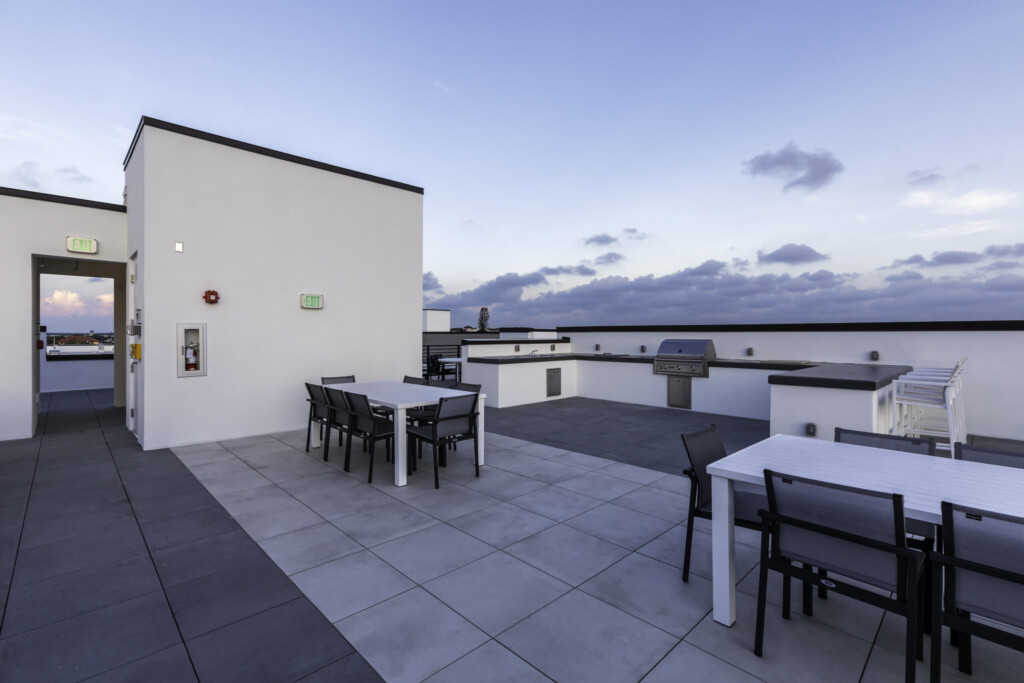
Why Most Flat Roof Decking Fails (And What Actually Works)
Why Most Flat Roof Decking Fails (And What Actually Works)
May 5, 2026
Flat-roofs offer one of the biggest opportunities in modern construction: turning unused space into functional outdoor environments.
But they also introduce one of the most misunderstood challenges in decking.
Most decking systems were never designed for flat roofs.
And that is exactly why so many fail.
Why Flat Roof Decking Fails More Often
Flat roofs operate under a completely different set of conditions than traditional decks.
- Minimal slope means water does not naturally shed
- Waterproofing membranes must remain fully intact
- Structural loads are tightly controlled
- Drainage paths must be intentional, not assumed
When these realities are ignored, failure is not a possibility. It is a timeline.
The most common failure points:
Water Trapping Instead of Water Management
Flat roofs rely on controlled drainage systems. Any decking method that blocks or slows water movement creates long-term risk.
Membrane Damage
TPO, PVC, and EPDM membranes are critical to the building envelope. Systems that introduce point loads, friction, or movement can compromise them over time.
Improper Structural Distribution
Flat roofs are engineered for specific load conditions. Concentrated weight or inconsistent support can lead to deflection or worse.
Movement and Instability
Loose-laid or non-integrated systems can shift, rock, or settle, especially under foot traffic or environmental stress.
Why Traditional Decking Methods Fail on Flat Roofs
Many decking approaches are adapted from ground-level construction. On flat roofs, those adaptations break down quickly.
Wood or Composite Over Sleepers
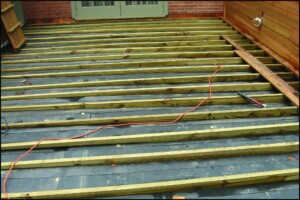
- Sleepers sit directly on the roof surface
- Water becomes trapped between layers
- Drainage paths are restricted or blocked
- Long-term moisture exposure accelerates failure
What works at ground level does not translate to a flat roof assembly.
Read More: Why Mbrico Tile Decks Last Longer Than Traditional Decking Systems
Loose-Laid Pedestal Paver Systems
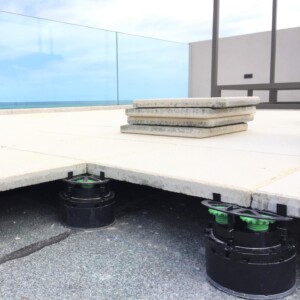
But they introduce a different set of issues:
- Individual pavers are not mechanically connected
- Movement and rocking can occur underfoot
- Wind uplift performance varies by system
- Long-term stability depends on perfect installation conditions
They solve one problem while creating another.
The Core Issue: Surface vs System
Flat roof failures are rarely caused by the surface material alone.
They are caused by the system underneath it.
- Surface-focused approaches ignore drainage mechanics
- Site-built assemblies introduce variability
- Non-integrated systems lack long-term stability
Flat roofs require a fully engineered system, not a collection of components.
Read More: Mbrico Systems vs Pavers on Pedestals
What Actually Works on Flat Roofs
For a decking system to perform long-term on a flat roof, it must address all of the following:
- Free drainage beneath the surface
- Protection of the waterproofing membrane
- Even load distribution across the structure
- Resistance to movement and wind uplift
- Long-term durability without maintenance cycles
Anything less is a compromise.
Engineered Porcelain Systems (Mbrico)
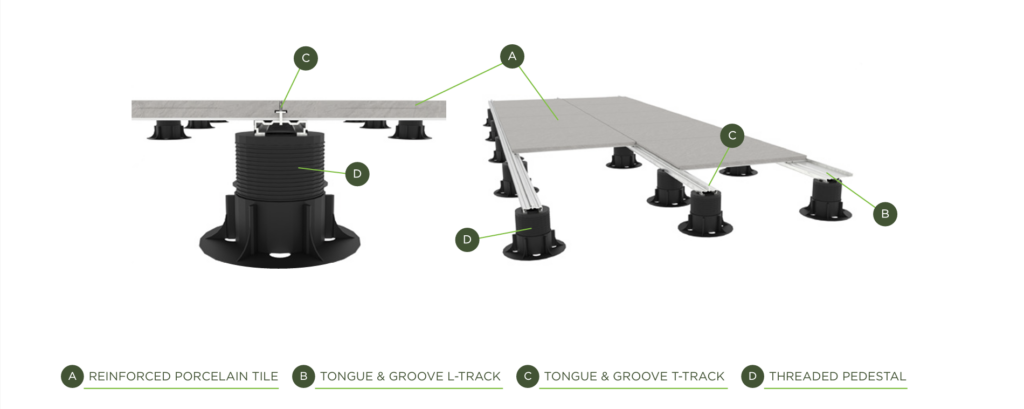
Rooftop & Pedestal System Detail | Mbrico
Instead of adapting traditional methods, engineered porcelain systems are designed specifically for elevated and flat roof applications.
Key characteristics:
- Mechanically fastened tiles eliminate movement and shifting
- Built-in spacing allows consistent, unobstructed drainage
- Reinforced structural tracks distribute load evenly
- Free-draining design protects the membrane below
- Non-porous porcelain surface resists moisture, mold, and freeze-thaw damage
This is not a surface upgrade. It is a system solution.
Performance Snapshot
- Designed specifically for flat roof and rooftop applications
- Approx. 4,500 lb load capacity per tile
- High slip resistance (DCOF compliant)
- Freeze-thaw resistant
- Non-combustible (Class A fire rating)
- Wind uplift tested and rated
- No sealing, staining, or maintenance required
Final Answer: What Is the Best Decking for Flat Roofs?
The best decking for flat roofs is not defined by the material alone.
It is defined by whether the system:
- Manages water correctly
- Protects the roof membrane
- Distributes load properly
- Eliminates movement
- Performs long-term without intervention
Most traditional decking methods fail because they were never designed for these conditions.
Engineered systems succeed because they are.
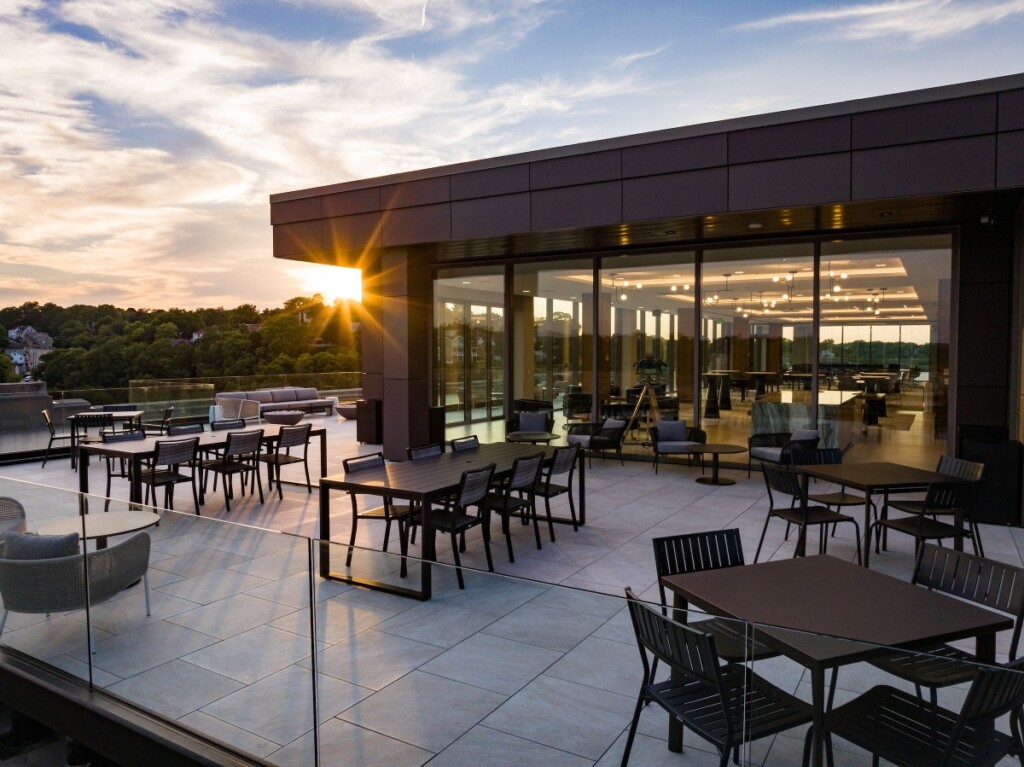
Historic Roshek Building | Dubuque, IA
Contact Us