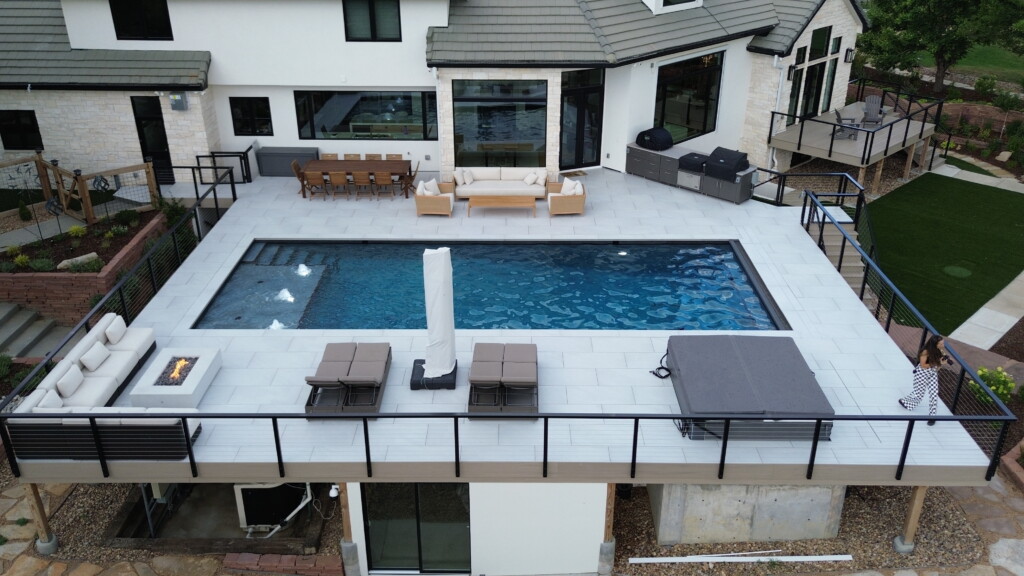
Homeowners Are Building for Daily Life, Not Resale
Homeowners Are Building for Daily Life, Not Resale
September 8, 2026
Outdoor living projects were once treated primarily as home improvements: add a deck, improve the landscaping and increase the property’s resale appeal.
That motivation still exists, but it is no longer driving the entire market.
Homeowners are increasingly designing outdoor spaces around how they want to live now. They are creating places for everyday meals, morning coffee, family gatherings, quiet evenings, outdoor cooking and year-round relaxation.
The result is a meaningful shift in outdoor design.
A deck is no longer just an addition to the house. It is becoming one of the most frequently used living spaces on the property.
The Quick Answer
The leading outdoor living trend in 2026 is a shift from resale-focused improvements toward spaces designed for everyday use.
Homeowners are investing in:
- Comfortable lounge and seating areas
- Outdoor kitchens and dining spaces
- Shade, lighting and fire features
- Distinct zones for different activities
- Durable, low-maintenance surfaces
- Materials that complement the architecture
- Spaces that remain functional throughout more of the year
This shift affects more than the layout. When a deck or patio becomes part of daily life, surface temperature, stain resistance, maintenance, drainage and long-term durability become increasingly important.
Homeowners Are Prioritizing Personal Use
The 2026 U.S. Houzz Outdoor Trends Study surveyed nearly 1,200 homeowners who had recently completed, were undertaking or were planning an outdoor renovation.
The study found that the share of homeowners renovating to make their outdoor spaces more accommodating increased to 25%, while the share motivated by improving resale value measured at 15%.
That does not mean resale value is irrelevant.
It means homeowners are less willing to postpone their enjoyment for the benefit of a future buyer. They want outdoor spaces that improve the way they cook, gather, entertain and relax today.
This helps explain why outdoor projects are becoming more ambitious, personalized and permanent.
The Backyard Is Becoming a Collection of Outdoor Rooms
The traditional backyard often consisted of one open lawn, one patio and a grill placed near the house.
Today’s outdoor spaces are more likely to be divided into purposeful zones.
According to the Houzz study, 83% of renovating homeowners included a lounge or seating area. Dining areas were included by 55% and quiet retreats or reading areas by 55%.
A single property may now include:
- A dining area outside the kitchen
- A lounge organized around a fire feature
- A poolside seating area
- A dedicated grilling or cooking station
- A shaded space for reading or working
- A rooftop or balcony retreat
- Paths that connect each outdoor zone
This is a more architectural approach to outdoor living. Instead of placing individual features wherever they fit, homeowners are considering how people will move between spaces and how each area will be used throughout the day.
Outdoor Spaces Are Being Furnished Like Interior Rooms
Daily use also changes what homeowners put outside.
Outdoor lounge areas increasingly include sofas, tables, lighting, fireplaces, televisions and other features traditionally associated with interior living rooms. Outdoor kitchens are expanding beyond freestanding grills to include refrigeration, sinks, storage, cooktops and dedicated utilities.
These are not temporary arrangements assembled for an occasional party.
They are permanent living environments.
As furniture, appliances and amenities become more substantial, the surface beneath them becomes more important. The deck or patio must accommodate spills, foot traffic, furniture loads, weather exposure and regular cleaning while continuing to support the overall design.
A surface selected primarily for its initial appearance may not meet those expectations over years of daily use.
Low Maintenance Means More Time Using the Space
Homeowners want more from their outdoor spaces, but they do not necessarily want more work.
For traditional wood decking, routine ownership may include staining, sealing, sanding and replacing damaged boards. Composite and PVC decking can reduce some of that maintenance, but homeowners should still evaluate cleaning requirements, surface heat, scratching, fading and dimensional movement.
Concrete pavers may provide a durable hardscape, although owners may need to account for staining, joint maintenance, weight and movement between individual units.
Porcelain offers a different maintenance profile. Its dense, low-absorption surface resists staining, moisture and UV-related color changes without requiring recurring staining or sealing.
The broader point is simple: if an outdoor space is intended for daily life, maintaining it should not become a second job.
Daily Use Changes How Decking Materials Should Be Evaluated
A lightly used deck may be able to tolerate compromises that become more noticeable when the space is used every day.
Homeowners planning an outdoor living project should consider questions such as:
| Daily-Life Question | Why It Matters |
|---|---|
| Will the surface become excessively hot in direct sunlight? | Surface temperature can affect barefoot comfort and when the space can be used. |
| How will it respond to food, beverages and cooking spills? | Outdoor kitchens and dining areas expose surfaces to grease, wine, sauces and other stains. |
| Will furniture scratch or damage the surface? | Daily movement of chairs, tables and planters creates repeated surface contact. |
| Does it require staining, sealing or refinishing? | Recurring maintenance reduces usable time and increases long-term ownership costs. |
| How does water drain from the space? | Rain, pool water and cleaning must be able to leave the assembly efficiently. |
| Will the material maintain its appearance? | Fading, staining, warping and movement become more visible in a finished living environment. |
| Can it support the intended amenities? | Outdoor kitchens, fire features, planters and furniture may introduce concentrated loads. |
| Does the surface complement the house? | An outdoor room should feel connected to the home rather than added as an afterthought. |
The right material depends on the project, but the selection process should begin with how the space will actually function.
Comfort Is Becoming a Design Requirement
Outdoor spaces cannot support daily life if they are only comfortable under ideal conditions.
That is why shade structures, lighting, fire features, screens and weather protection are becoming more common. Each helps extend the number of hours or seasons in which the space can be used.
The walking surface also contributes to comfort.
Dark or heat-absorbing materials may become difficult to use during sunny periods. Uneven or unstable surfaces can complicate furniture placement and accessibility. Materials that retain water or stains may require more frequent intervention.
A well-designed outdoor space considers these conditions from the beginning.
Comfort is not an accessory added after construction. It is part of the performance of the complete space.
Design Expectations Are Expanding
As decks and patios become outdoor rooms, homeowners are also moving beyond the assumption that every elevated outdoor surface must look like a traditional deck.
Wood, composite and PVC boards remain familiar options, especially when a plank appearance is desired. However, outdoor rooms increasingly borrow visual cues from interior flooring, architectural stone and large-format tile.
Porcelain can reproduce the appearance of:
- Natural stone
- Limestone and travertine
- Concrete
- Slate
- Wood
- Contemporary architectural finishes
This allows the surface to coordinate with siding, masonry, countertops, pool finishes and interior flooring.
For projects designed around daily life, that continuity matters. The outdoor space is not a separate utility area. It is part of the home’s complete architectural experience.
Outdoor Living Requires More Than a Surface
As outdoor projects become more complex, homeowners are also relying more heavily on professional expertise.
Houzz reported that 71% of homeowners hired at least one professional for an outdoor renovation, up from 65% in 2024. That reflects the growing sophistication of projects involving structures, utilities, kitchens, fire features, drainage and multiple activity zones.
The same system-level thinking should be applied to the deck itself.
A successful outdoor surface must account for:
- Structural support
- Drainage
- Ventilation
- Fastening
- Material movement
- Point loads
- Surface spacing
- Long-term access and repair
- The conditions beneath the finished surface
Selecting an attractive material is only one part of the decision. Homeowners, architects and builders should also determine how that material becomes a stable and complete outdoor assembly.
How Mbrico Supports Everyday Outdoor Living
Mbrico reinforced porcelain deck systems are designed for outdoor spaces that must balance architectural appearance with long-term performance.
Mbrico combines exterior-grade porcelain with structural reinforcement, aluminum support tracks and mechanical fastening. Depending on the project, the system can be installed over conventional joist framing, adjustable rooftop pedestals or a low-profile ventilated support system.
For outdoor living applications, this provides:
- A non-porous, stain-resistant porcelain surface
- No recurring staining or sealing
- Resistance to fading and freeze-thaw exposure
- Open joints for drainage and ventilation
- Structural reinforcement beneath elevated tiles
- Mechanically connected system components
- Stone, concrete and wood-look design options
- Solutions for decks, patios, balconies, pool surrounds and rooftops
This makes reinforced porcelain particularly relevant for outdoor kitchens, dining areas, lounge spaces and other applications where the surface will be seen and used regularly.
Build for the Life You Are Living
Resale value will always be one consideration in a major home improvement project.
It simply does not have to be the only one.
The most important outdoor living trend of 2026 is not a particular color, appliance or furniture style. It is the decision to create outdoor spaces around real routines and personal enjoyment.
That changes what homeowners should expect from the finished project.
An outdoor space designed for daily life should be comfortable enough to use, durable enough to trust, easy enough to maintain and attractive enough to feel like a true part of the home.
Before choosing a decking material, start with the most practical question:
How do you want to live in this space?
Then choose the complete system that can support that answer.
Explore Mbrico reinforced porcelain deck systems or contact Mbrico for samples, technical information and project-specific assistance.
Contact Us