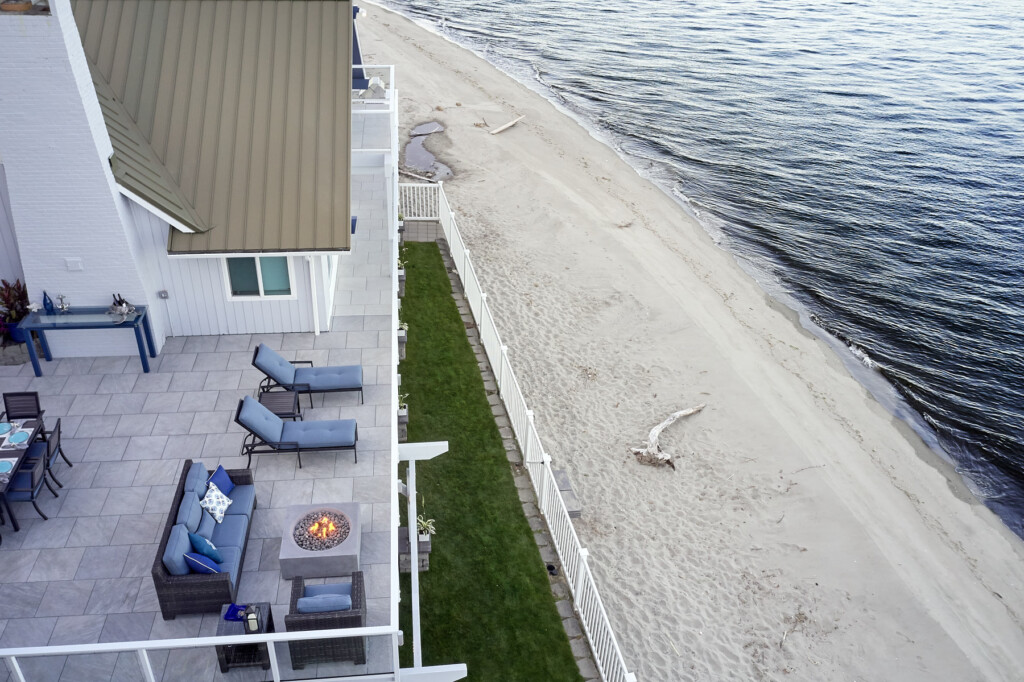
How Mbrico Tile Decks Perform in Coastal Climates
How Mbrico Tile Decks Perform in Coastal Climates
February 9, 2026
Coastal environments are among the most challenging conditions for outdoor construction. Constant moisture, salt air, wind, and intense sun exposure combine to accelerate material degradation. Decking systems used near oceans, bays, and large bodies of water must withstand more than just weather. They must resist corrosion, moisture intrusion, and long term surface breakdown.
Mbrico Tile Decks are engineered to perform in coastal climates by addressing these challenges at both the material and system level.
Why Coastal Climates Are Hard on Decking
Salt and moisture are highly destructive when combined with heat and wind. In coastal regions, decks are exposed to conditions that are far more aggressive than typical inland environments.
Common coastal challenges include:
- Salt spray and airborne chlorides
- Constant humidity and moisture exposure
- Accelerated corrosion of metal components
- Mold, mildew, and surface staining
- UV exposure amplified by reflective water surfaces
Decking systems that cannot manage moisture and corrosion tend to deteriorate quickly in these settings.
How Traditional Decking Materials Perform Near the Coast
Many common decking materials struggle in coastal environments.
Wood decking
- Absorbs moisture and salt, leading to rot and warping
- Requires frequent sealing and maintenance
- Degrades quickly under constant humidity
Composite decking
- Resists rot but can trap moisture beneath boards
- May fade or discolor under intense UV exposure
- Can become slick due to algae growth
Fasteners and framing beneath these surfaces are often the first components to fail.
Porcelain Tile Advantages in Coastal Conditions
Porcelain tile offers inherent properties that make it well suited for coastal use. It is dense, non porous, and highly resistant to environmental exposure.
Key benefits include:
- No moisture absorption
- Resistance to salt and chemical corrosion
- UV stable color and surface finish
- No organic material to support mold or mildew growth
Because porcelain does not absorb water, it avoids many of the issues that plague wood and composite decking near the coast.
System Level Protection with Mbrico Tile Decks
Coastal performance is not only about surface material. The system beneath the deck plays a critical role in long term durability.
Mbrico Tile Decks use adjustable pedestals and aluminum tracks to elevate the tile surface. This creates airflow and drainage below the deck, allowing moisture to escape rather than remain trapped.
System level advantages include:
- Improved drainage and drying
- Reduced corrosion risk compared to traditional framing
- No direct fastening through waterproofing layers
- Easy access for inspection and maintenance
Aluminum components are particularly beneficial in coastal environments due to their resistance to corrosion compared to untreated steel fasteners.
Slip Resistance in Wet and Humid Conditions
Coastal decks are frequently wet from mist, rain, or humidity. Slip resistance must be reliable even when surfaces are damp.
Mbrico porcelain tiles are manufactured with textured surfaces designed for outdoor traction. This texture is built into the tile rather than applied as a coating, ensuring consistent performance over time.
Unlike wood, porcelain does not develop slick grain patterns. Unlike composites, it does not rely on surface embossing that can wear smooth.
Wind, Sand, and Surface Wear
Wind driven sand is another factor that affects coastal decking. Abrasive particles can wear down softer materials over time.
Mbrico porcelain tile resists surface wear and scratching, maintaining its appearance even in high wind environments. Sand can be easily swept or rinsed away without damaging the surface.
This durability helps preserve both safety and aesthetics in exposed locations.
Maintenance and Long Term Ownership in Coastal Regions
Coastal decks often demand more maintenance than inland installations.
Traditional decks may require:
- Frequent cleaning and sealing
- Replacement of corroded fasteners
- Ongoing mold and mildew treatment
Mbrico Tile Decks are designed for straightforward ownership:
- No sealing or refinishing
- Simple cleaning with fresh water
- Easy access to replace individual tiles if needed
These benefits can significantly reduce maintenance time and costs in coastal settings.
Final Perspective
Coastal climates expose weaknesses in many outdoor decking systems. Salt, moisture, and wind accelerate deterioration and increase maintenance demands.
Mbrico Tile Decks address these challenges through non porous porcelain tile and a system designed for drainage, airflow, and corrosion resistance. For coastal projects where durability, safety, and long term performance matter, this approach provides a clear advantage over traditional decking materials.
Contact Us