What is DCOF? Slip Resistance Explained for Outdoor Decking
What is DCOF? Slip Resistance Explained for Outdoor Decking
April 7, 2026
When specifying or building an outdoor surface, traction is not a “nice to have.” It is a safety requirement. Yet one of the most important performance metrics in exterior surfacing is often overlooked or misunderstood: DCOF.
Whether you are designing a rooftop amenity, a multifamily balcony, a flat roof terrace, or an elevated deck system, understanding DCOF is critical to making the right material decision.
What is DCOF?
DCOF stands for Dynamic Coefficient of Friction. It measures how much slip resistance (or traction rating) a surface provides when a person is in motion, not standing still.
This distinction matters.
- Static Coefficient of Friction (SCOF) measures grip when standing
- DCOF measures grip while walking, turning, or changing direction
In real-world applications like wet rooftops, pool decks, balconies exposed to rain, or freeze-thaw environments, movement is where slips actually occur. That is why DCOF has become the industry standard for evaluating traction.
Why DCOF Matters in Exterior Applications
Outdoor environments introduce variables that interior flooring never sees:
- Rain and standing water
- Snow and ice
- Dust, pollen, and debris
- Temperature swings and condensation
These conditions reduce traction. A surface that feels “fine” when dry can become hazardous when wet.
This is especially critical in:
- Rooftop decks with high foot traffic
- Multifamily balconies where liability is shared
- Flat roof systems with drainage exposure
- Elevated decks subject to weather from all sides
If the material does not maintain a high DCOF in these conditions, it introduces real risk.
The Industry Benchmark: What is a “Safe” DCOF?
The Tile Council of North America (TCNA) established a widely accepted guideline:
- Minimum DCOF of 0.42 for level interior surfaces when wet
Here is where it gets interesting.
That 0.42 threshold is not even designed for exterior environments. It is a baseline for interior spaces like commercial kitchens or entryways.
For exterior applications, especially exposed systems like rooftops and balconies, you should be targeting significantly higher DCOF values.
Why Many Decking Materials Fall Short
Most traditional decking materials were never engineered with DCOF as a primary performance metric.
Composite & PVC Decking
- Can become slick when wet
- Surface wear reduces traction over time
- Heat can soften surfaces, impacting grip
Wood Decking
- Naturally varies in slip resistance
- Prone to algae, mildew, and moisture retention
- Requires ongoing treatment to maintain traction
Concrete Pavers
- Texture varies widely
- Can polish over time with foot traffic
- Joint spacing can create inconsistent footing
These materials are often selected for appearance or familiarity, not measured performance.
Why Porcelain Changes the Conversation
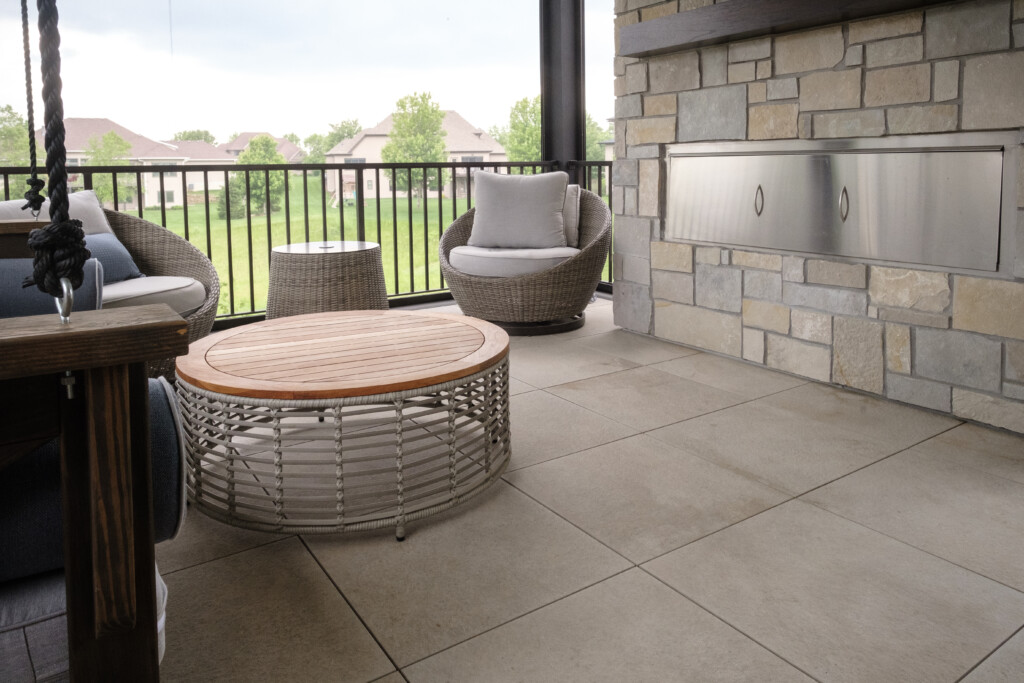
High-quality exterior porcelain, especially when engineered for elevated systems, is designed with DCOF in mind.
- Textured surfaces maintain grip in wet conditions
- Non-porous composition prevents moisture absorption
- Performance remains consistent over time
- Tested to meet or exceed slip resistance standards
For applications like rooftops, balconies, and flat roof decks, this consistency is key.
You are not relying on coatings, treatments, or maintenance cycles to preserve traction. The performance is built into the material itself.
DCOF and ADA Considerations
Slip resistance is not just a best practice. It is tied directly to accessibility standards.
The Americans with Disabilities Act (ADA) requires walking surfaces to be stable, firm, and slip-resistant.
While ADA does not mandate a specific DCOF number, in practice:
- Materials with higher DCOF values are more likely to meet compliance expectations
- Consistent traction across the surface is critical
- Transitions between materials must not introduce slip hazards
For architects and developers, specifying a surface with proven DCOF performance helps reduce both compliance risk and liability.
Read More: Is Mbrico Slippery When Wet?
The Real-World Impact: Where DCOF Shows Up
DCOF is not theoretical. It directly impacts how a space performs in daily use.
Consider:
- A hotel rooftop bar after rain
- A multifamily balcony in early morning condensation
- A flat roof terrace during freeze-thaw cycles
- A residential elevated deck around a grill or pool
In each of these scenarios, traction is the difference between a safe surface and a liability.
Specifying for Performance, Not Assumptions
One of the biggest mistakes in exterior design is assuming all surfaces perform the same.
They do not.
Instead of asking:
- “Does it look like it has texture?”
You should be asking:
- “What is the tested DCOF value?”
- “How does it perform when wet?”
- “Will that performance hold over time?”
This shift from aesthetic judgment to measured performance is what separates commodity decking from engineered systems.
Where Mbrico Fits In
Mbrico systems are built around performance at every level, including traction.
- Porcelain surfaces with high DCOF ratings
- Engineered stability with zero wobble underfoot
- Free-draining systems that reduce standing water
- Consistent performance across rooftops, balconies, and elevated decks
The result is a system that does not just meet expectations. It is designed to exceed them in the environments where failure is most likely.
Final Takeaway
DCOF is one of the most important, and most underutilized, metrics in exterior surface specification.
If you are designing or building for rooftops, balconies, flat roofs, or elevated decks, traction should not be assumed. It should be measured, specified, and verified.
Because in real-world conditions, performance is not defined by how a surface looks.
It is defined by how it performs when it matters most.
Contact Us