
What Decking Materials Meet Miami-Dade Wind Uplift Standards?
What Decking Materials Meet Miami-Dade Wind Uplift Standards?
April 23, 2026
Rooftop decks in coastal and high-wind regions are not judged by appearance. They are judged by performance under extreme uplift forces.
If a decking system cannot resist wind uplift, it is not a rooftop system. It is a liability.
Miami-Dade County sets one of the most stringent benchmarks in the United States. Products that meet this standard have been tested to withstand hurricane-level wind events, including sustained pressure and uplift forces that far exceed typical building conditions.
This matters far beyond Florida. Architects and developers across the country use Miami-Dade approvals as a proxy for long-term performance and risk reduction.
What Is Miami-Dade Wind Uplift Approval?
Miami-Dade approval, often issued as a Notice of Acceptance (NOA), verifies that a system has passed rigorous structural testing.
Testing typically includes:
- Wind uplift resistance under extreme pressure conditions
- Cyclic loading that simulates real storm conditions
- Failure point analysis under sustained uplift forces
- System-level testing, not just individual components
Many systems fail this standard because they are not engineered as a unified assembly.
Why Most Decking Materials Do Not Meet the Standard
The majority of decking materials used today were never designed for rooftop wind performance.
Composite Decking
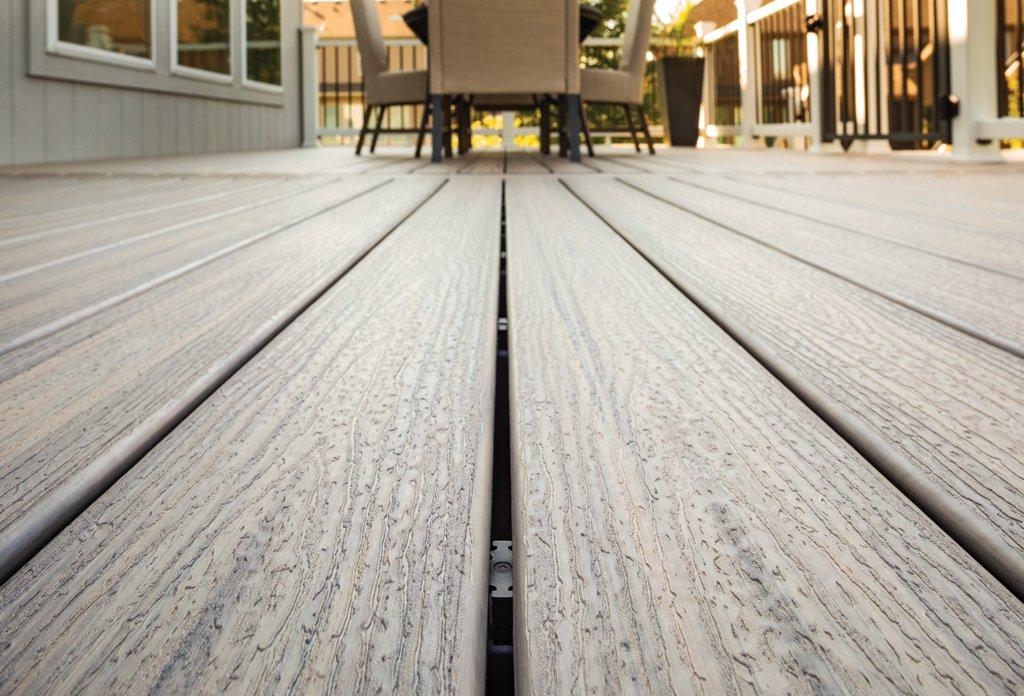
Composite boards rely on:
- Hidden clips or surface fasteners
- Expansion gaps for thermal movement
- Joist-based structural support
These systems are not designed to resist uplift forces at the surface level. Wind can penetrate beneath the boards, creating pressure zones that lead to movement, loosening, or failure.
Result: No Miami-Dade NOA for composite decking systems as a rooftop assembly.
Wood Decking
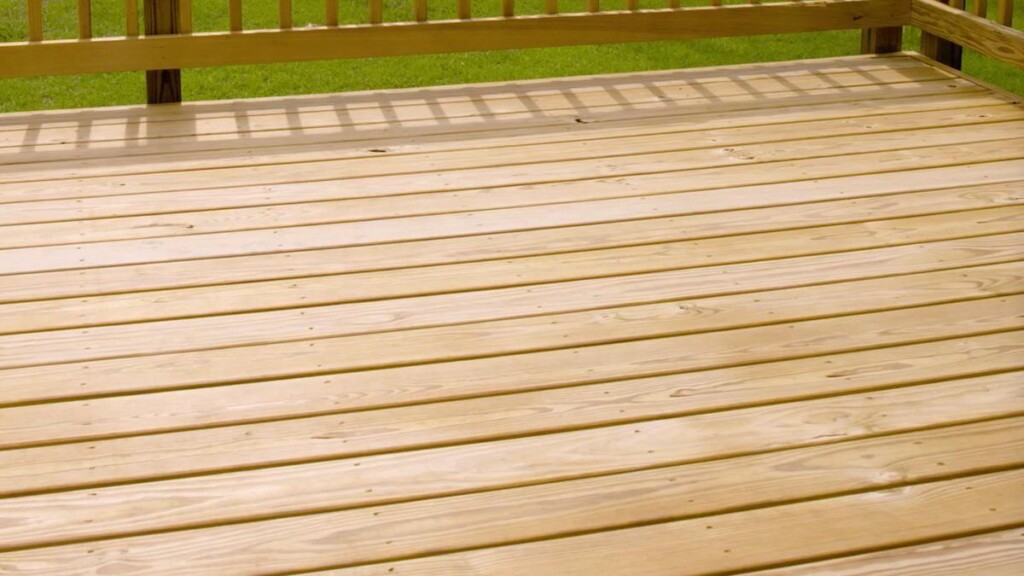
Wood decking presents additional challenges:
- Natural expansion and contraction
- Fastener loosening over time
- Susceptibility to moisture and warping
These variables make it nearly impossible to engineer consistent uplift resistance.
Result: Wood systems are not approved for Miami-Dade wind uplift as surface systems.
Conventional Pedestal Paver Systems
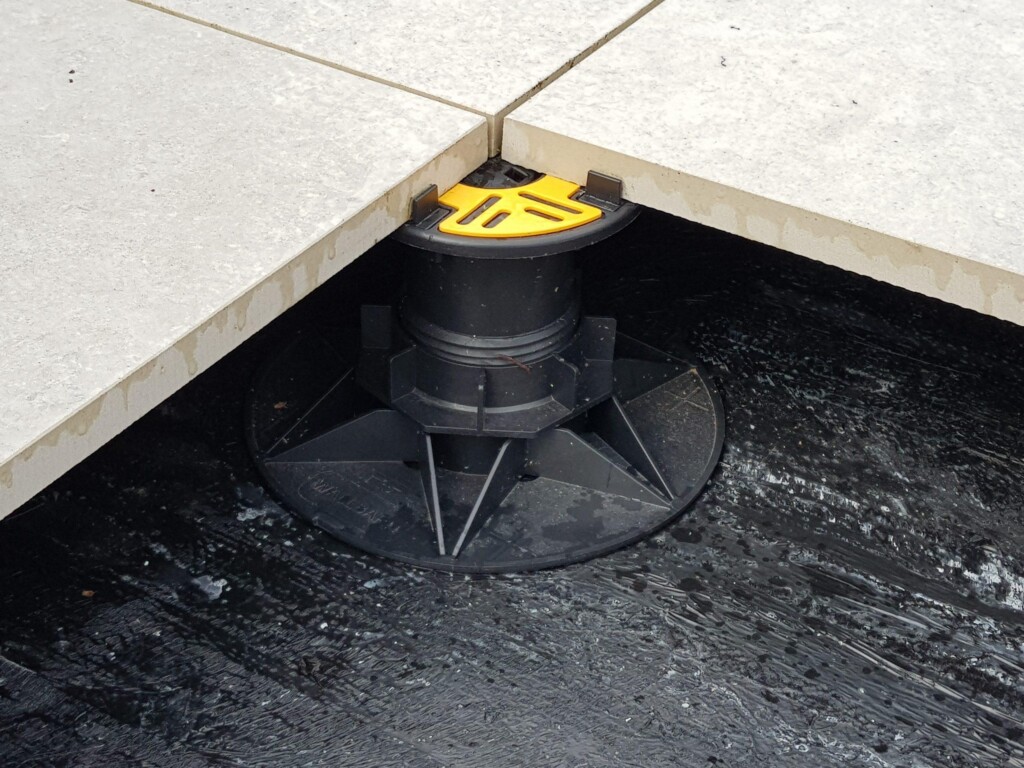
Conventional pedestal systems are widely used on rooftops, but most are:
- Loose-laid (not mechanically fastened)
- Dependent on weight for stability
- Vulnerable at edges and corners
In high-wind scenarios, uplift forces can get underneath pavers and displace them.
Some manufacturers attempt ballast calculations, but this is not the same as system-level wind uplift approval.
Result: Most conventional pedestal systems do not carry Miami-Dade NOA for uplift resistance.
Read More: Mbrico vs Tile Tech
What Materials Do Meet Miami-Dade Wind Uplift Standards?
Very few decking systems achieve this level of performance because the requirement is not just about material. It is about how the system is engineered.
Mbrico’s Mechanically Fastened Porcelain Deck Systems
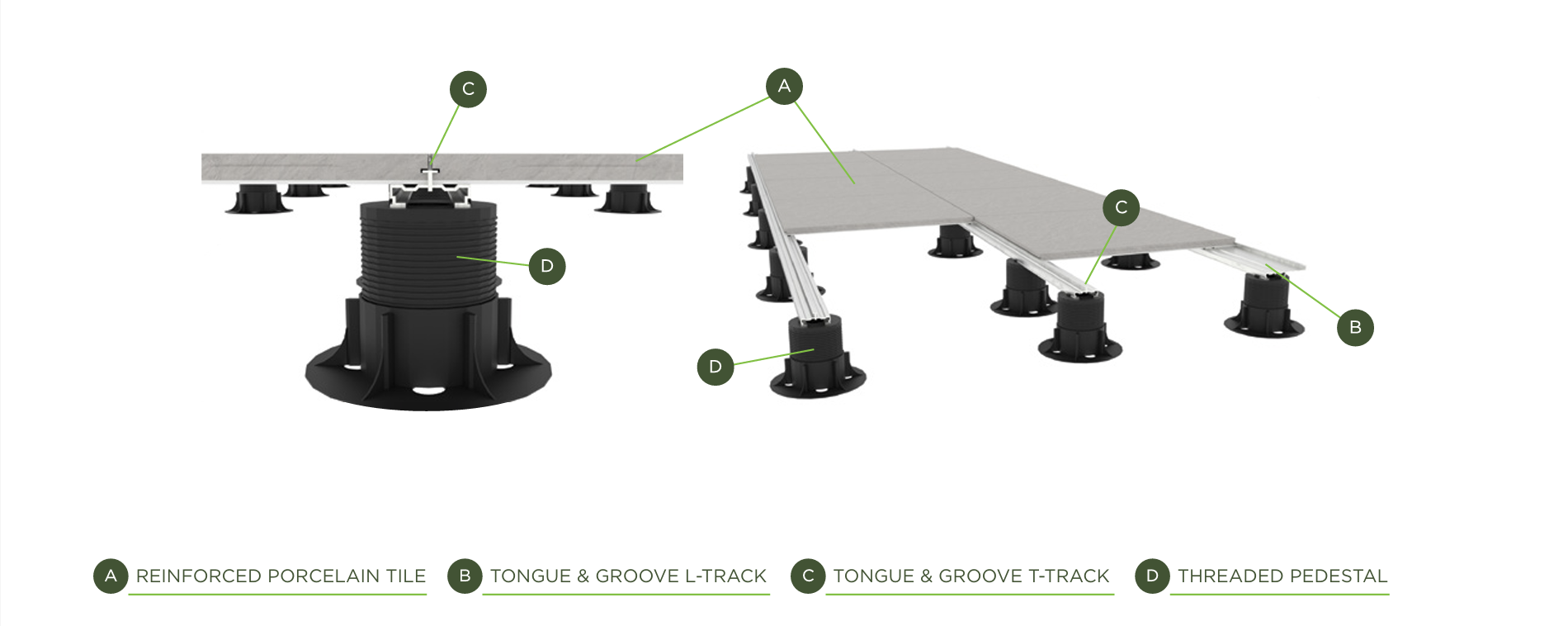
Rooftop & Pedestal System Detail | Mbrico
Engineered porcelain systems that are:
- Mechanically fastened to the structure
- Installed with interlocking or track-based systems
- Designed as a continuous surface assembly
are capable of achieving Miami-Dade approval when properly tested.
This system eliminates the key failure points:
- No loose-laid components
- No reliance on weight alone
- No open gaps that allow wind intrusion
- No independent board movement
Result: Systems with full assembly engineering and fastening can achieve Miami-Dade NOA and verified uplift resistance.
Watch: Mbrico Wind Uplift Test Video
Why System Design Matters More Than Material Alone
A critical mistake in decking specification is evaluating material instead of system.
Wind uplift performance depends on:
- Attachment method to the structure
- Surface continuity and spacing
- Edge restraint conditions
- Load transfer across the assembly
A high-strength material alone does not pass Miami-Dade testing. The entire system must perform as one unit.
What Architects and Developers Should Look For
When specifying a rooftop decking system in high-wind regions, look for:
- Verified Miami-Dade NOA documentation
- System-level testing, not component claims
- Mechanical fastening methods
- Minimal or controlled surface spacing
- Proven performance in real-world rooftop installations
If these are not present, the system has not been validated for extreme wind conditions.
Read More: Why Architects Love Mbrico
The Bottom Line
Most decking materials used in residential and commercial construction today do not meet Miami-Dade wind uplift standards.
Not because they are low quality. Because they were never engineered for rooftop performance at that level.
Only fully integrated, mechanically fastened systems have the ability to pass.
If the goal is long-term performance on a rooftop, especially in coastal or high-wind environments, Miami-Dade approval is not a bonus.
It is the baseline.
Contact Us