What Is a Reinforced Porcelain Deck System?
What Is a Reinforced Porcelain Deck System?
August 4, 2026
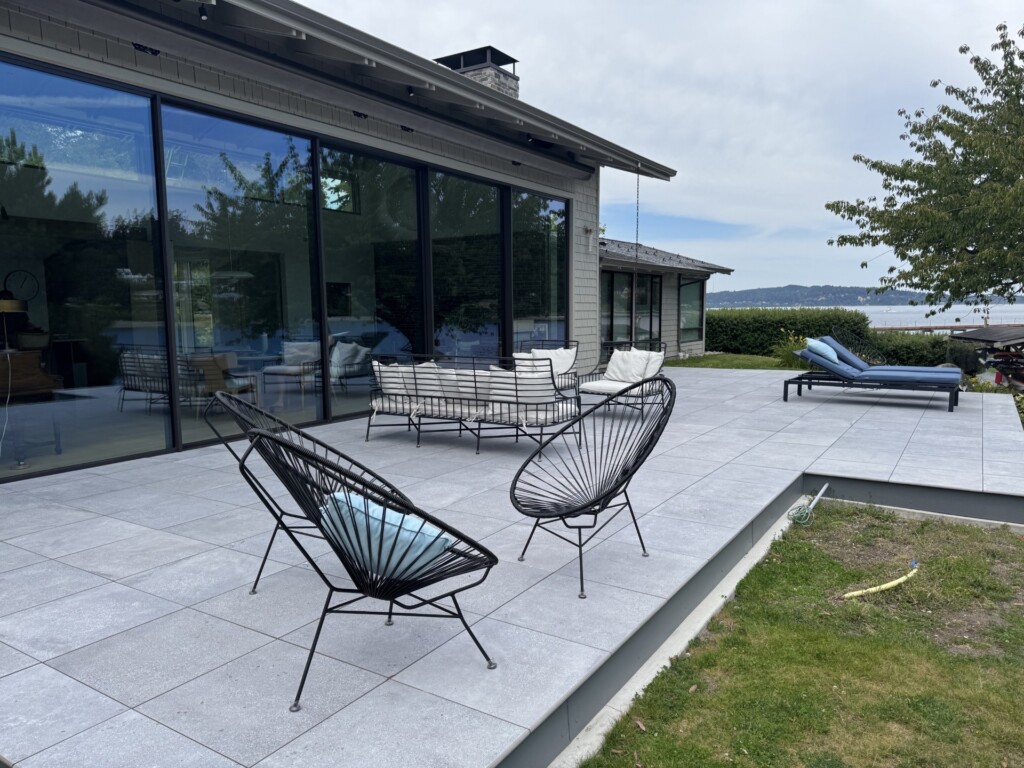
Mbrico’s reinforced porcelain deck system is a patented & engineered outdoor flooring system that combines high-density porcelain surfacing with structural reinforcement, mechanical fastening, and a purpose-built support system.
Unlike traditional tile installations, reinforced porcelain deck systems are not simply adhered to a concrete slab. They are designed to function as a complete exterior assembly for decks, balconies, rooftops, patios, pool areas, and other elevated outdoor surfaces.
The result is the durability and design flexibility of porcelain in a system engineered specifically for exterior decking applications.
How Does a Reinforced Porcelain Deck System Work?
A reinforced porcelain deck system uses several coordinated components to create a stable, long-lasting surface.
These components typically include:
- Exterior-grade porcelain decking
- Structural reinforcement beneath the porcelain
- An aluminum track or support system
- Mechanical fastening components
- Drainage and ventilation space below the surface
Each component serves a specific purpose. The porcelain provides the finished walking surface. The reinforcement improves structural performance. The supporting tracks transfer loads to the framing or pedestal system. Mechanical connections help keep the surface securely positioned.
Together, these components create a deck surface that performs differently from conventional tile, wood decking, or composite boards.
What Does “Reinforced Porcelain” Mean?
Reinforced porcelain is porcelain decking that has been strengthened for use in demanding exterior applications.
Porcelain is naturally dense, non-porous, and resistant to moisture. Reinforcement adds another level of structural support, allowing the material to be incorporated into an elevated deck assembly rather than installed only over a continuous concrete substrate.
This makes reinforced porcelain suitable for applications where the finished surface must span or transfer loads across an engineered support structure.
It is important to distinguish reinforced porcelain decking from standard indoor porcelain tile. A complete deck system must account for structural loads, drainage, movement, fastening, ventilation, weather exposure, and the conditions beneath the finished surface.
What Are the Main Parts of a Reinforced Porcelain Deck System?
Reinforced Porcelain Surface
The porcelain forms the visible surface of the deck. It provides the color, texture, finish, and overall design character of the space.
Because porcelain is non-porous, it does not absorb water in the same way as wood and many other exterior materials. It also does not require staining, painting, or sealing as part of a recurring maintenance schedule.
Engineered Support Tracks
Support tracks create the structural connection between the porcelain surface and the underlying deck framing or pedestal layout.
In a joist-framed application, the tracks are installed over the framing and support the reinforced porcelain pieces above. In a rooftop or elevated application, tracks may be incorporated with pedestals to create a level, supported surface over the structure below.
Mechanical Fastening
Mechanical fastening helps secure the deck surface to the supporting system.
This is an important difference between an engineered porcelain deck and loosely placed exterior pavers. Mechanical connections help control movement and create a more unified deck assembly.
Drainage and Ventilation
A reinforced porcelain deck system is designed to allow water to move through or below the finished surface rather than becoming trapped within the assembly.
The open space beneath the porcelain supports drainage, airflow, and access to the structure below. This ventilated design can be particularly valuable for rooftops, balconies, and moisture-sensitive exterior applications.
Where Can Reinforced Porcelain Deck Systems Be Used?
Reinforced porcelain deck systems can be used across a wide range of residential and commercial applications, including:
- Residential decks
- Rooftop amenity spaces
- Balconies
- Terraces
- Patios
- Pool surrounds
- Multifamily developments
- Hospitality properties
- Mixed-use buildings
- Commercial outdoor spaces
The appropriate installation method depends on the structure, elevation, framing conditions, waterproofing requirements, and intended use of the space.
For example, a conventional residential deck may use a joist-framed system, while a rooftop terrace may require an adjustable pedestal-supported assembly.
How Is Reinforced Porcelain Decking Different From Traditional Tile?
Traditional exterior tile is commonly installed with mortar, adhesives, grout, and a continuous substrate such as concrete.
A reinforced porcelain deck system uses a different approach. Rather than relying on a bonded installation, the porcelain is integrated into an engineered support and fastening system.
This creates several practical differences:
- It can be installed over deck framing or pedestal supports.
- It does not require a continuous concrete slab in every application.
- It allows space for drainage and ventilation below the surface.
- It can provide access to underlying waterproofing or utilities.
- It avoids many of the limitations associated with grout-based exterior installations.
The system is designed as decking, not simply as tile placed outdoors.
What Are the Benefits of a Reinforced Porcelain Deck System?
Low Maintenance
Reinforced porcelain decking does not require the recurring staining, sealing, or painting associated with many conventional deck materials.
Routine maintenance generally consists of cleaning the surface as needed.
Moisture Resistance
Porcelain is non-porous and does not rot, swell, or absorb water like wood-based products.
This makes it well suited for decks, balconies, pool areas, and other spaces regularly exposed to rain, snow, humidity, or surface water.
Long-Term Surface Stability
Porcelain is resistant to many of the cosmetic changes that can affect traditional decking materials.
It does not splinter, warp, or develop the same surface checking associated with wood. It is also resistant to staining and fading under normal exterior use.
Fire Performance
Porcelain is a non-combustible surface material. This can make a reinforced porcelain deck system an important consideration for projects with elevated fire-performance requirements.
The performance of the complete assembly should always be evaluated according to the applicable building code, project design, and tested system configuration.
Design Flexibility
Porcelain is available in a broad range of colors, patterns, textures, and visual styles.
This allows architects, designers, builders, and homeowners to create surfaces that resemble stone, concrete, wood, or other architectural materials while maintaining the performance characteristics of porcelain.
Drainage and Airflow
The space beneath the finished deck surface allows water to drain away and air to circulate.
This helps prevent moisture from becoming trapped and supports a cleaner, more serviceable exterior assembly.
Reduced Replacement Cycles
A long-lasting deck surface can reduce the need for repeated removal, refinishing, and replacement.
This supports both lifecycle value and sustainability by keeping materials in service longer and reducing recurring maintenance inputs.
Is Reinforced Porcelain Decking Slippery?
Slip resistance depends on the specific porcelain finish and the conditions in which it is used. Mbrico’s porcelain systems are ADA-compliant for skid-resistance, offering a slip-free surface, even when wet.
Exterior porcelain decking should be selected based on documented slip-resistance testing and the intended application. Pool areas, commercial walkways, accessible routes, and frequently wet surfaces may require specific performance criteria.
A textured exterior porcelain finish from Mbrico can provide traction while preserving the appearance and cleanability of the surface.
Can Reinforced Porcelain Decking Be Used in Cold Climates?
Yes. Properly specified exterior porcelain perform in freeze-thaw environments because it absorbs very little moisture.
However, cold-climate performance depends on more than the surface material alone. The complete system must account for drainage, expansion and contraction, structural movement, snow loads, installation conditions, and local code requirements.
Mbrico’s fully engineered porcelain systems help address these factors as part of the complete deck design.
Can a Reinforced Porcelain Deck Be Installed Over Wood Framing?
Yes, when the system is specifically engineered for a joist-framed installation.
The supporting tracks are installed over the structural framing, and the reinforced porcelain surface is mechanically secured to the system.
The existing framing, if still up to local code, will not need and enhancements to support Mbrico systems.
Can It Be Installed on a Rooftop?
Yes. Mbrico’s reinforced porcelain deck systems can be installed over rooftops using an engineered pedestal-supported assembly.
Adjustable pedestals can help create a level walking surface over a sloped roof while maintaining space beneath the deck for drainage, waterproofing, utilities, and ventilation.
This makes the system well suited for rooftop terraces, amenity decks, hospitality spaces, multifamily buildings, mixed-use developments, and high wind zones requiring wind uplift.
Is Reinforced Porcelain the Same as Porcelain Pavers?
Not necessarily.
Porcelain pavers describe the surface material. A reinforced porcelain deck system describes the complete assembly, including the porcelain, reinforcement, tracks, connections, and supporting structure.
Some porcelain pavers are placed loosely on pedestals or installed over a prepared base. Mbrico systems incorporate additional structural and mechanical components intended to create a more integrated deck surface, thanks to the tongue and groove design.
What Should Be Considered Before Specifying a Reinforced Porcelain Deck?
Before choosing a system, the project team should evaluate:
- Intended use and occupancy
- Structural loading
- Joist spacing or pedestal layout
- Deck elevation
- Drainage requirements
- Waterproofing conditions
- Wind exposure
- Fire-performance requirements
- Slip resistance
- Accessibility
- Local building codes
- Edge and perimeter conditions
- Access to utilities or roof components
Early coordination between the architect, contractor, structural engineer, waterproofing team, and decking manufacturer can help reduce installation conflicts and ensure the system is properly detailed.
What Makes Mbrico a Complete Reinforced Porcelain Deck System?
Mbrico combines reinforced porcelain decking with a patented track and fastening system engineered for exterior applications.
The system can be configured for joist-framed decks, rooftop pedestal installations, and low-profile ventilated applications. Each configuration is designed to provide a durable finished surface while supporting drainage, ventilation, structural performance, and long-term serviceability.
Mbrico is used for decks, balconies, rooftops, pool areas, patios, and commercial outdoor spaces where conventional decking or traditional tile may not provide the desired combination of performance and design.
Contact Us