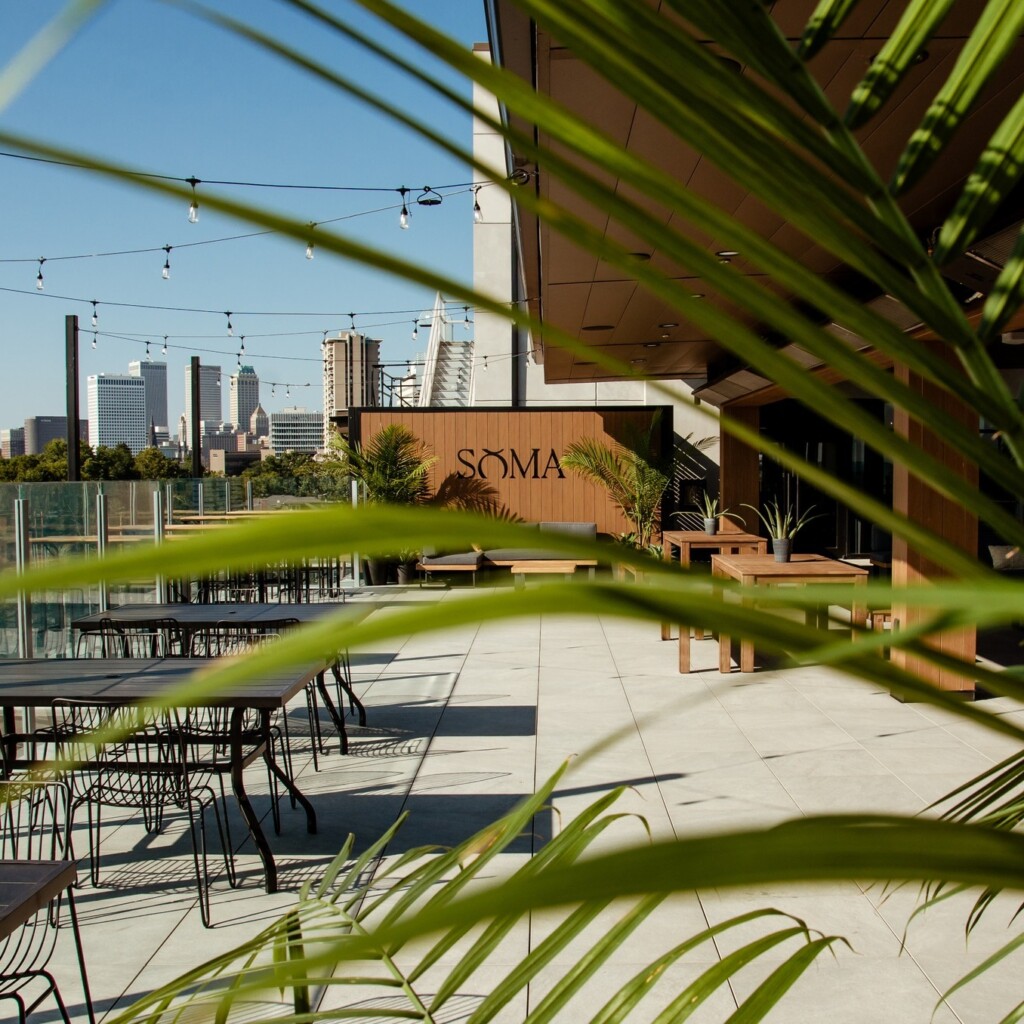
Why Rooftop Decks Fail
Why Rooftop Decks Fail
April 17, 2026
Rooftop decks are one of the most demanding applications in construction.
They sit over conditioned space. They are fully exposed to weather. They must manage water, movement, structural loads, and safety all at once.
And yet, most rooftop decks are not designed as systems. They are assembled from parts.
That is why they fail.
Read More: What Is the Best Rooftop Decking System?
The Core Problem: Rooftop Decks Are Treated Like Surface Finishes
Most failures come down to one mistake:
Designing the surface without engineering the system.
A rooftop deck is not just what you walk on. It is a layered assembly:
- Structure
- Waterproofing membrane
- Insulation (in many cases)
- Drainage plane
- Deck system
- Finished surface
If any layer is disconnected from the others, failure is inevitable.
Water Management Failure
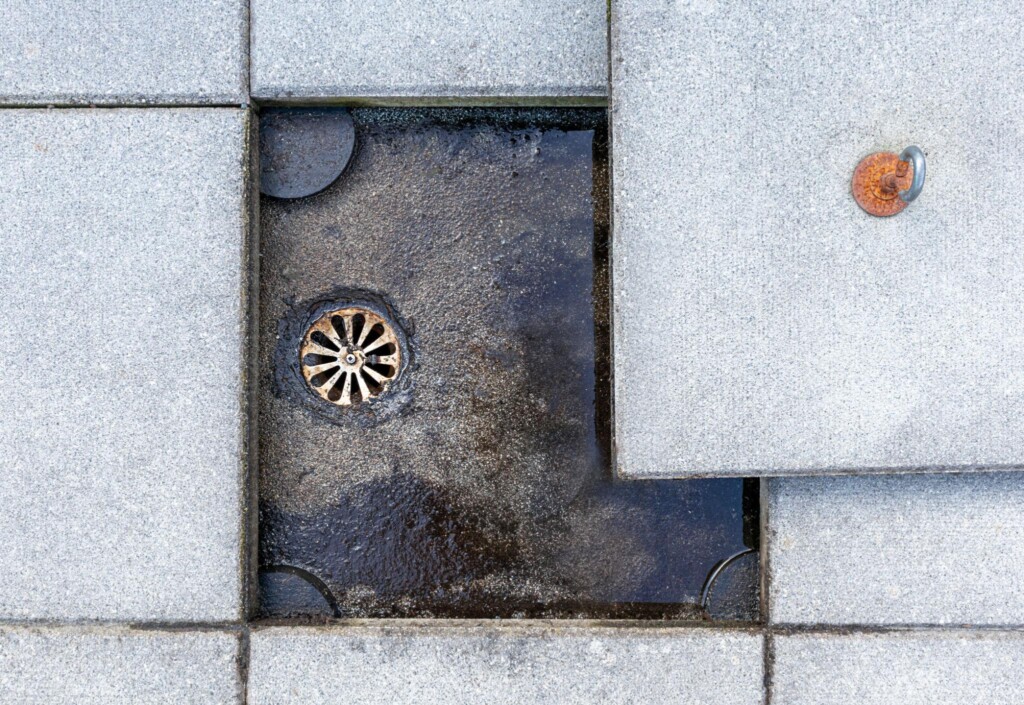
Water is the #1 cause of rooftop deck failure.
What goes wrong:
- Standing water and paver water absorption
- Blocked or ineffective drainage paths from uneveness
- Systems that trap moisture instead of shedding it
- Membrane damage from adhesives, bonding agents, movement, or point loading
Why it fails:
Pedestal pavers, for example, create void space but do not control water flow. Over time, debris buildup, uneven settling, and membrane irregularities lead to water retention.
What long-term performance requires:
- Free-draining surface design
- Controlled water pathways
- Minimal obstruction between surface and membrane
If water lingers, the system is already failing.
Structural Instability and Movement
A rooftop deck must feel solid underfoot. Most do not.
What goes wrong:
- Wobble between pavers or tiles
- Independent movement of components
- Shifting under foot traffic or thermal expansion
- Long-term settling of pedestals
Why it fails:
Many systems are not mechanically connected.
They rely on:
- Gravity
- Friction
- Loose placement
That creates a floating surface, not a structural system.
The result:
- User discomfort
- Increased wear
- Progressive system breakdown
A rooftop deck should behave like a unified structure. Most behave like a collection of loose parts.
Read More: What Are the Problems with Pedestal Pavers? Common Failures in Rooftop Deck Systems
Freeze-Thaw Breakdown
In climates with seasonal temperature swings, failure accelerates.
What goes wrong:
- Water freezes beneath the surface
- Expansion creates pressure on components
- Repeated cycles cause cracking, shifting, and separation
Why it fails:
- Systems allow water to sit instead of drain
- Materials absorb moisture or expand unevenly
- No integration between layers to control movement
The outcome:
What starts as minor movement becomes full system degradation within a few seasons.
Read More: How Mbrico Performs in Freeze Thaw Climates
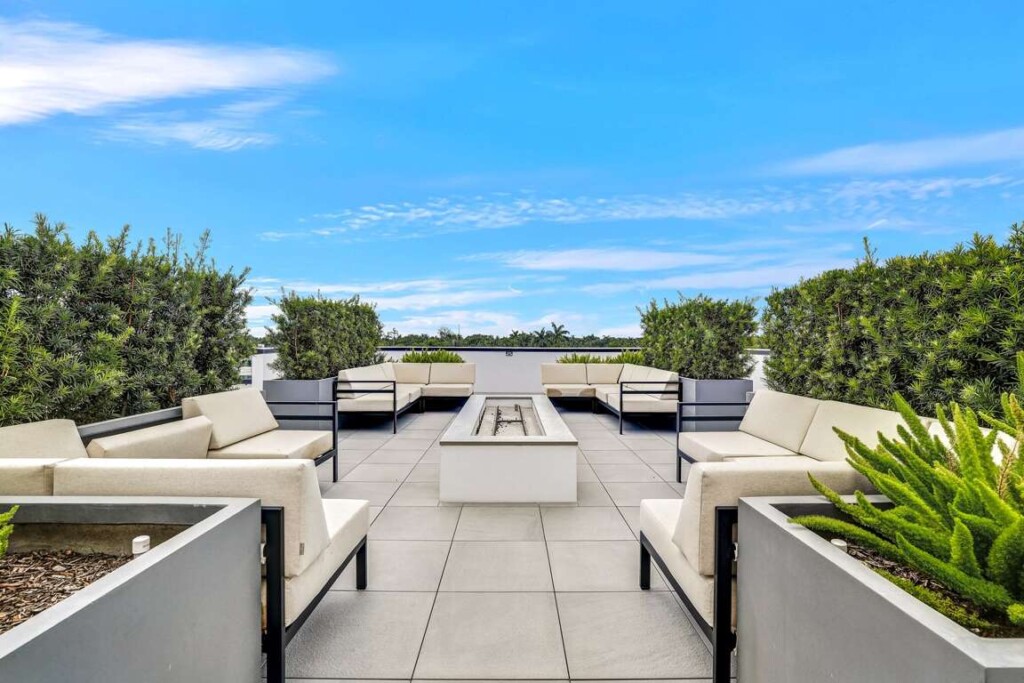
850 Central Club | Naples, FL
Wind Uplift and Safety Risks
Rooftop decks are exposed to wind in a way ground-level decks are not.
What goes wrong:
- Loose pavers shift or lift
- Components become airborne in extreme conditions
- Systems fail to meet code-required uplift resistance
Why it fails:
Most rooftop surfaces are not mechanically fastened.
They are simply placed on pedestals or supports.
The reality:
Without tested and engineered uplift resistance, rooftop decks are a liability in:
- Coastal regions
- High-rise applications
- Open exposure environments
Membrane Damage Over Time
The waterproofing layer is the most critical component of a rooftop assembly.
What goes wrong:
- Point loading from pedestals or supports
- Abrasion from movement
- Trapped moisture accelerating degradation
- Difficult access for maintenance or inspection
Why it fails:
The deck system is not designed to protect the membrane long-term.
Instead, it often:
- Concentrates loads in small areas
- Moves independently above it
- Makes repairs difficult without full disassembly
When the membrane fails, the entire assembly fails.
Maintenance Dependency
Many rooftop decks only perform if they are constantly maintained.
What goes wrong:
- Debris blocks drainage
- Components shift and need resetting
- Organic growth builds up in trapped moisture areas
Why it fails:
The system was never designed to be self-sustaining.
It depends on:
- Regular cleaning
- Manual adjustments
- Ongoing oversight
That is not realistic for most commercial or residential applications.
Why Most Rooftop Deck Systems Fail
It is not one issue. It is the combination.
- Water is not controlled
- Components are not connected
- Movement is not managed
- Loads are not distributed
- The membrane is not protected
The system is incomplete.
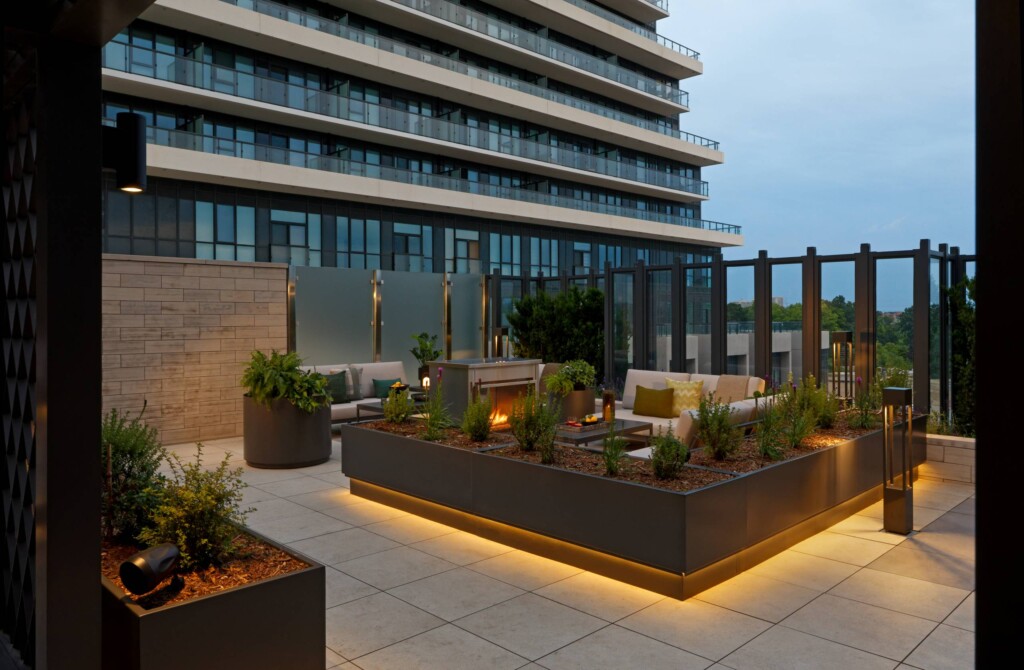
Auberge on the Park | Toronto, CAN
What Actually Works Long-Term
Rooftop decks only succeed when they are designed as integrated systems, not assembled surfaces.
That means:
- Mechanically connected components
- Built-in drainage, not assumed drainage
- Structural stability underfoot
- Proven performance in wind, water, and temperature extremes
- Protection of the waterproofing layer
Anything less is temporary.
Bottom Line
Rooftop decks fail because they are treated like finishes.
They succeed when they are engineered like systems.
If the design does not account for water, structure, movement, and long-term durability as a single solution, failure is not a possibility.
It is a timeline.
The Shift Toward Engineered Rooftop Deck Systems
The industry is starting to move away from loose-laid surfaces and pedestal-only assemblies.
Instead, high-performance rooftop decks are being designed as fully integrated systems that address:
- Drainage at the surface level
- Mechanical connection between components
- Structural stability across the entire assembly
- Long-term protection of the waterproofing layer
This is where newer system-based approaches, like Mbrico, fundamentally differ.
Rather than relying on gravity or independent components, these systems are:
- Mechanically fastened
- Free-draining by design
- Structurally unified
- Engineered for wind, load, and freeze-thaw performance
The result is not just a better surface.
It is a complete rooftop deck system designed to perform for the life of the structure.
Contact Us